🏙️ From Palaces to Instagram Feeds
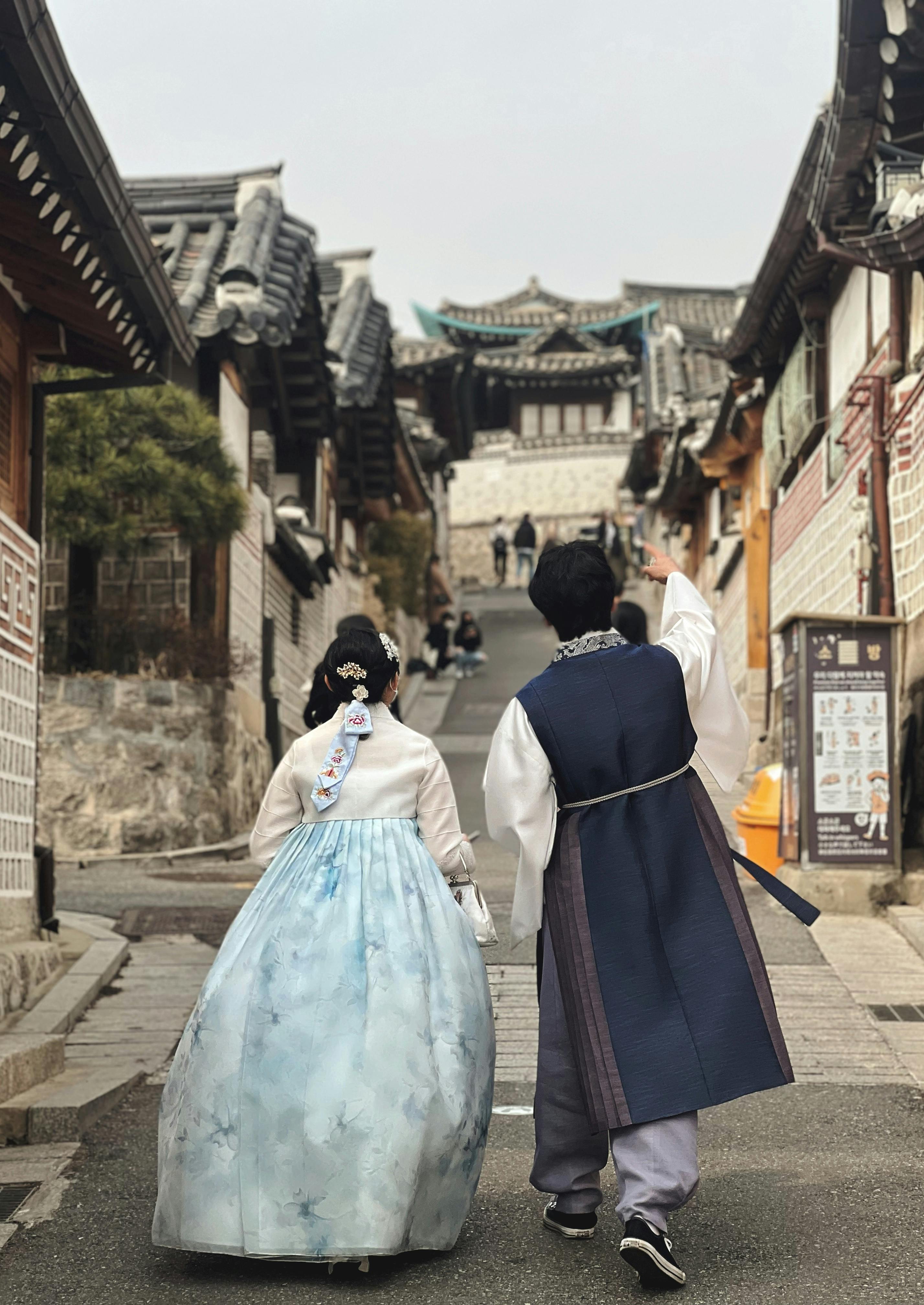
If you ever visit Gyeongbokgung or Changdeokgung on a weekend, you’ll notice something magical — not just the palaces themselves, but the people wandering around them. Groups of friends, couples, and even tourists from all over the world are dressed in hanbok, Korea’s traditional outfit, taking pictures under the curved rooftops and ancient gates.
They laugh as they pose, trying to hold their wide skirts just right or fix a loose ribbon caught by the wind. You can hear camera shutters, the soft rustle of silk, and the occasional “하나, 둘, 셋!” before everyone freezes in a perfect smile.
Most palaces in Seoul — including Gyeongbokgung, Deoksugung, and Changdeokgung — offer free admission if you’re wearing hanbok. So what started as a money-saving tip turned into a cultural trend. Rental shops line the streets near the palaces, offering everything from pastel spring colors to royal-inspired styles. Some even include hair styling and small bags to match. By the time you walk through the palace gates, you’ll see hundreds of modern-day “princes” and “court ladies,” phones in hand, turning the courtyard into a living K-drama set.
👗 The Rise of Modern Hanbok
Traditional hanbok is stunning, but let’s be honest — it’s not exactly built for subways and office life. That’s why the new generation came up with modern hanbok, a lighter, easier, and trendier version.
Today’s hanbok comes in softer fabrics, pastel tones, and minimalist cuts. You’ll even spot people pairing jeogori-style tops with sneakers or denim jackets. It’s not about reviving the past — it’s about reinterpreting it. Young Koreans wear hanbok to connect with their roots without feeling stuck in tradition.
It’s become part of photo culture too. Influencers post #hanbokstyle shots against stone walls or cafés in Bukchon Hanok Village, while K-pop idols wear sleek reinterpretations on stage. Somehow, hanbok has found a second life — on runways, social media, and travel itineraries alike.
🌏 Global Curiosity and Local Pride
For many foreign visitors, wearing hanbok feels like stepping into another era. Rental shops hand them a mirror, fix their hairpins, and send them off into the palace grounds with a bright smile. You’ll often see tourists giggling as they try to walk gracefully, their skirts brushing the cobblestones. Locals nearby sometimes offer to take their photos — and yes, they’ll say, “You look beautiful!”
What’s heartwarming is how normal it feels. Koreans no longer see hanbok as a museum relic. It’s part of the living city — something to enjoy, not preserve behind glass.
If you’re planning to rent a hanbok, go early in the day — by noon, the shops around Gyeongbokgung and Bukchon get busy. Ask the staff for color recommendations based on the season: mint green in spring, coral pink in summer, or navy and gold in autumn. And yes, wear comfortable shoes — you’ll thank yourself later when walking across the palace courtyards.
🌸 Fabric That Breathes with the Seasons
What makes hanbok so graceful isn’t just its silhouette — it’s the fabric. Traditional hanbok used silk, ramie, or hemp, all materials that breathe with the weather. It’s cool in the summer and cozy in the winter, moving softly with every step.
Modern versions sometimes use lighter blends, but they still keep that elegant, floating quality. The beauty of hanbok is never about luxury — it’s about harmony. Each color once carried meaning: white for purity, blue for stability, red for joy, yellow for balance.
“Neomu yeppeoyo!” (너무 예뻐요!) = “You’re so pretty!”
Say this when you see someone in hanbok — it’s friendly, natural, and makes everyone smile.
💕 Where Tradition Meets Today
Hanbok today lives in moments — engagement photos, graduation portraits, or weekend outings with friends. It’s no longer reserved for ceremonies but worn to celebrate milestones, express creativity, and connect generations.
Fashion designers are pushing it further. You’ll see hanbok-inspired outfits on K-drama actors, music videos, and even red carpets abroad. It’s become a quiet form of soft power — a visual reminder of Korean elegance.
So if you find yourself near Gyeongbokgung one day and see someone adjusting a ribbon under the palace eaves, stop for a moment. That single outfit carries centuries of craftsmanship, pride, and reinvention — proof that tradition in Korea never really disappears; it just keeps finding new ways to shine.
'🌿 Discover Korean Culture > 🏠 Korean Daily Life & Lifestyle' 카테고리의 다른 글
| 🍽️ Service, Korean style — just press the button. (1) | 2025.10.13 |
|---|---|
| 🚇 Free Transfers?! Only in Korea 🤯 (0) | 2025.10.13 |
| 🌈 Why Koreans Practically Live at Convenience Stores (0) | 2025.10.12 |
| 🪶 Hidden Calm: Discovering Korea’s Hanok Cafés (0) | 2025.10.12 |
| 🚚 While You Were Sleeping: Korea’s Dawn Delivery Culture (0) | 2025.10.09 |


