🤔 Wait… A corndog with sugar on it?
If you think you’ve seen every kind of street food, Korea will still find a way to surprise you. When I first handed a K-corndog to my American friend, he looked at it like I was breaking every culinary rule. “Hold on,” he said, “Is that sugar on a hot dog?” Yes, my friend. And no one’s complaining.
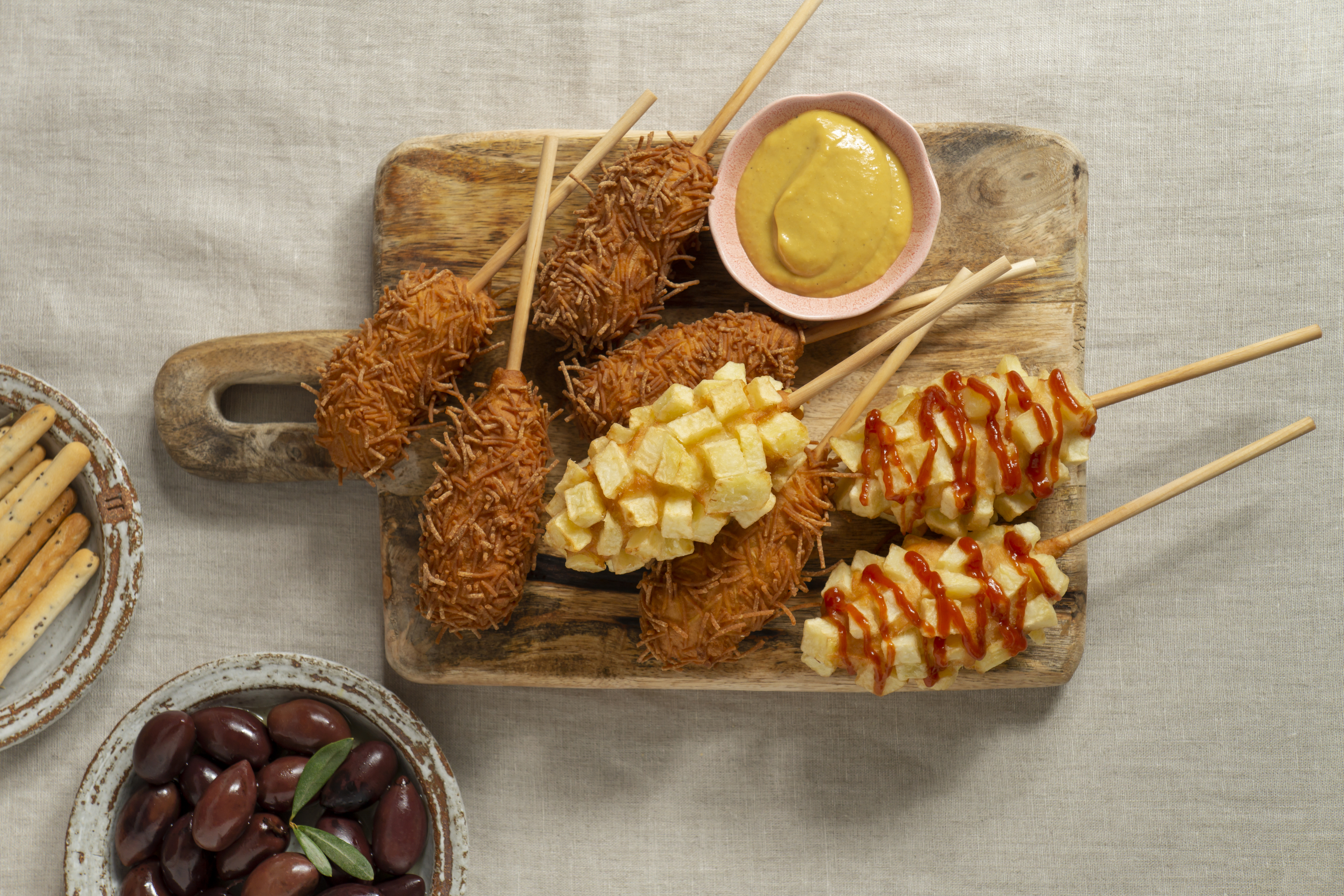
K-corndogs—deep-fried, crispy, and often sprinkled with sugar—are one of those Korean street snacks that make foreigners pause, take a bite, and then go, “Wait… why is this so good?”
🍡 Not Your Average Fair Corndog
The name might sound familiar, but the experience is a total upgrade. Instead of just sausage, Korean corndogs come in endless variations: mozzarella, potato cubes, rice cakes, even squid ink batter. It’s like the street vendors decided that one stick should hold an entire food adventure.
Foreigner: “Wait, is this cheese stretching from here to Seoul?”
Korean vendor: “That’s the point! The longer the cheese, the better the photo!”
🧀 The Social Media Explosion
If you scroll through TikTok or Instagram, you’ll find countless K-corndog challenges—gooey cheese pulls, crispy bites, and sugar-sprinkled fingers. Foreigners tag them as “K-snack heaven”, while locals just smile and grab another stick on the way home.
“One bite. One cheese pull. Instant addiction.”
💬 Little Language Quirk
In Korean, hotdog (핫도그) usually refers to what foreigners call a “corndog.” Meanwhile, the American “hotdog in a bun” is called hotdog sandwich or hotdog bread (핫도그빵). So yes, if you ask for a hotdog in Seoul, you’ll likely get one on a stick—with sugar.
❤️ Why Travelers Remember It
Because it’s unexpected.
Because it’s messy and sweet and crispy all at once.
Because it breaks every rule your taste buds thought they knew—and somehow, it works.
🌏 Cultural Insight
Many foreigners wonder why Korean snacks often mix sweetness and saltiness—sugar on fried food, honey on pizza, or cheese with spicy sauce. But to Koreans, this sweet & savory harmony isn’t strange at all—it’s comfort.
This balance, often nicknamed “dan-jjan (단짠)”, shows up everywhere: soy-sauce chicken, tteokbokki, and yes, the K-corndog. Korean cuisine loves contrast and surprise, never staying one-dimensional.
“Sweet and salty—that’s how Korea finds balance in every bite.”
So when you bite into a sugar-dusted, cheese-filled K-corndog, you’re not just eating a street snack—you’re tasting Korea’s playful spirit of balance and creativity.
🪂 Traveler’s Tip Box
💰 Average Price: Around 2,000–4,000 KRW ($1.50–$3). Premium mozzarella or potato versions may cost a bit more.
📍 Best Spots to Try: Street stalls in Myeong-dong, Hongdae, Gwangjang Market. Abroad, check Korean groceries or K-snack cafés—many sell frozen versions.
💡 Local Etiquette: Walk-and-eat is common, but toss the stick in the vendor’s trash box.
📸 Tip: Hold the corndog slightly higher and pull slowly—the longer the cheese, the bigger the smiles (and the likes).
✨ Want more stories like this?
Join my free newsletter 👇
'🌿 Discover Korean Culture > 🍲 Korean Food & Dining Culture' 카테고리의 다른 글
| 🧠 Why Soju Means More Than Just a Drink in Korea — The Spirit of Connection (0) | 2025.10.15 |
|---|---|
| 🌶️ Korea’s Fiery Love Affair with Spice (0) | 2025.10.08 |
| 🍗 Why Korean Chicken Blows Everyone’s Mind (0) | 2025.10.07 |
| From Lunchbox Classic to Global Star: Kimbap’s Worldwide Takeover (0) | 2025.10.06 |
| “Korean Side Dishes: The Unlimited Feast You Never Saw Coming” (0) | 2025.10.01 |


