💬 Where Trust Saves Your Seat
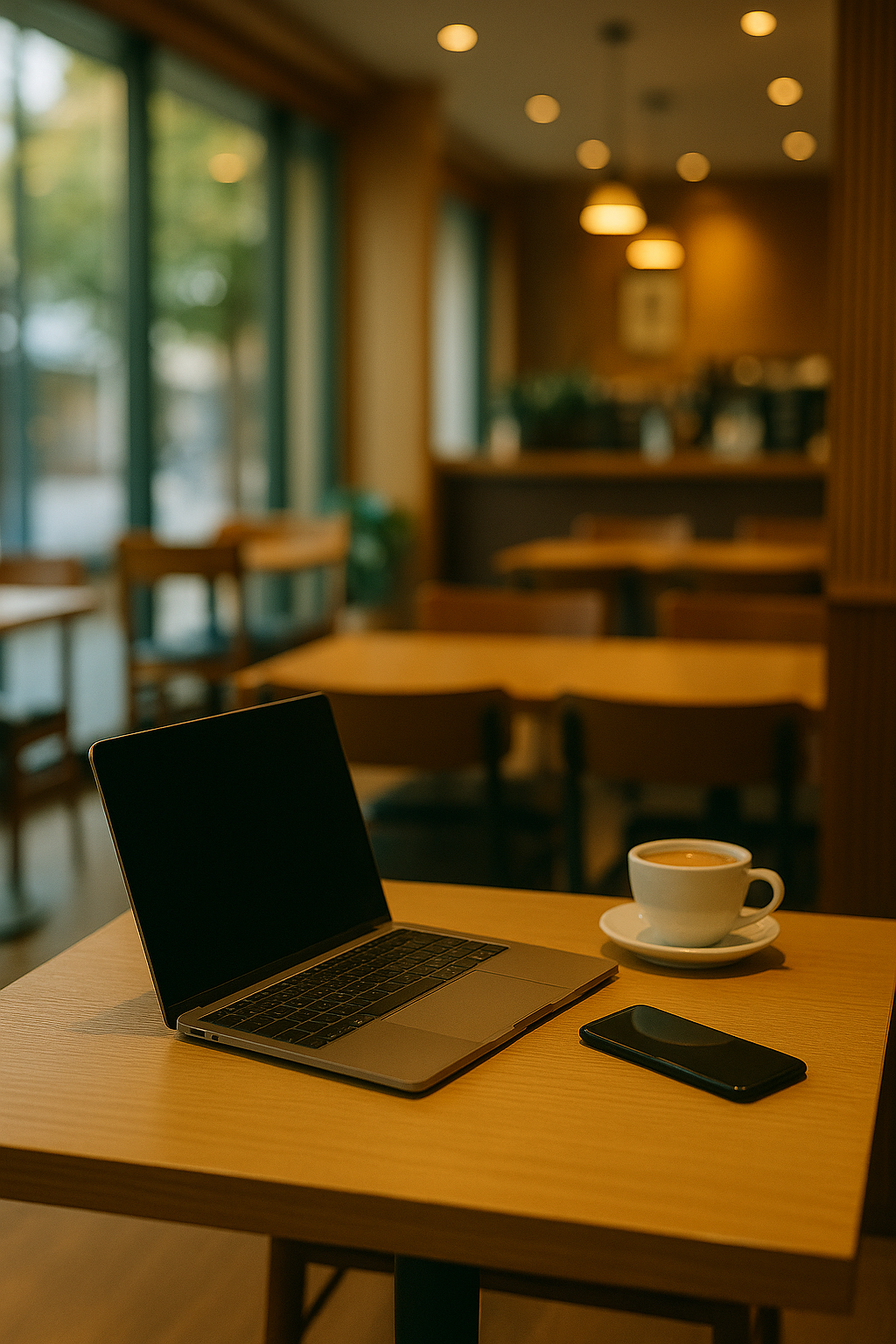
Have you ever sat in a café and wondered what would happen if you left your phone or laptop alone for a few minutes? In most countries, that thought comes with a little panic — maybe you’d ask a stranger to “watch your stuff,” or you’d carry everything with you, even just to grab a napkin.
But in Korea, people do the exact opposite. They leave their things — sometimes even wallets or bags — and simply walk away. No hesitation. No fear. It’s not magic or blind optimism. It’s something deeper: an everyday trust that most visitors can’t quite believe until they see it themselves.
• • •
☕ Everyday Trust on Display
If you walk into any café in Seoul, you’ll see tables “reserved” by a single item — a wallet, a phone, or even a half-empty drink. It’s not rudeness. It’s a quiet signal that says, “I’ll be right back.” No one takes advantage of it. No one moves it aside. The unspoken rule is simple: “It’s not mine, so I won’t touch it.”
I once left my laptop at a busy café in Gangnam while I went to the restroom. I was gone for almost ten minutes. When I came back, everything was exactly as I left it — even the charger cord was still plugged in. This kind of everyday integrity is so natural here that Koreans rarely even think of it as “special.” But for many travelers, it’s an unforgettable moment of culture shock.
💥 Culture Shock Moment
Foreigners often gasp when they see expensive gadgets left on café tables without supervision. For them, it’s not just surprising — it feels impossible.
💬 FAQ
- Q: Can I really leave my laptop or bag at a café while I order?
- A: Yes, most Koreans do — but it’s best to take valuables like passports or wallets, just in case.
- Q: What about nighttime or crowded areas?
- A: Still safe compared to most countries, but use common sense. Koreans value safety, but accidents can happen anywhere.
• • •
📦 Packages Piled by the Door
The same trust extends to homes and apartments. In many neighborhoods, parcels sit patiently in front of doors — groceries, clothes, even electronics — waiting to be collected. Delivery drivers simply leave them there, snap a photo, and move on. Hours later, the boxes are still right where they were delivered.
Even during the holidays, when deliveries multiply and streets get busy, the same quiet order remains. It’s not about luck — it’s about shared respect, woven into daily life.
“In Korea, safety isn’t just protection — it’s a quiet agreement between people.”
• • •
💖 Why Travelers Remember It
Korea’s calm sense of safety doesn’t shout; it simply exists. It’s in the unguarded cafés, the quiet subway rides, and the delivery boxes that wait without worry. For many visitors, this quiet confidence feels like a breath of fresh air in a world that often expects the worst.
You start to notice how freeing it feels to trust — to walk away for a moment and know your things will still be there. And when you finally leave Korea, that’s what lingers: not just the food or the scenery, but the rare peace of mind that comes from living in a place built on mutual respect.
💬 Phrase to Impress Locals
“Yeogi jari isseoyo?” (여기 자리 있어요?) — “Is this seat taken?”
Use this when you see small personal items on a table or chair and want to politely check if someone has already claimed the spot.
'🌿 Discover Korean Culture > 🏠 Korean Daily Life & Lifestyle' 카테고리의 다른 글
| 💄 Why Are Koreans So Serious About Skincare? (0) | 2025.10.17 |
|---|---|
| 🚌 Wait… It Tells You When Your Bus Is Coming?! (1) | 2025.10.15 |
| 🍽️ Service, Korean style — just press the button. (1) | 2025.10.13 |
| 🚇 Free Transfers?! Only in Korea 🤯 (0) | 2025.10.13 |
| ✨ Why Hanbok Still Turns Heads in Modern Korea (0) | 2025.10.13 |


