✨ The Milky Drink That Isn’t Milk
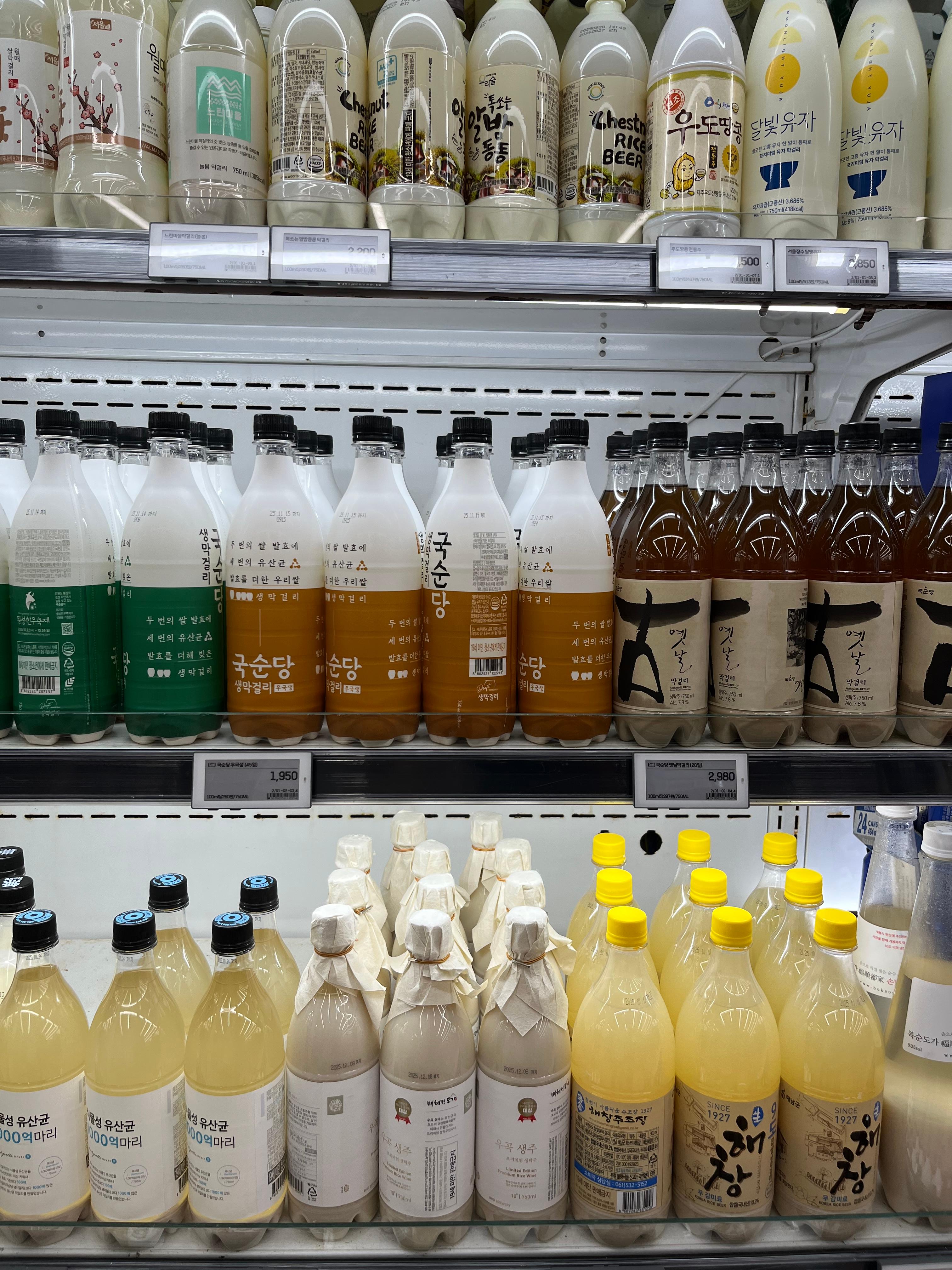
If you’ve ever traveled through Korea, you’ve probably seen it — a milky, slightly fizzy drink poured into a small bowl instead of a glass. That’s makgeolli, Korea’s traditional rice wine — sweet, tangy, and cloudy.
It’s often the first “surprise” drink for travelers. It looks like milk, but tastes like a blend of sparkling sake and yogurt. And just like Korea itself, it’s both ancient and incredibly modern.
🌾 A Drink Born from Rice
Long before soju became Korea’s nightlife star, makgeolli was the drink of farmers. After a long day in the fields, they mixed steamed rice, water, and nuruk (a natural fermentation starter) in clay pots and let nature do the rest. A few days later, the mixture turned cloudy and lightly alcoholic — their simple, rustic reward.
The word “makgeolli” literally means “roughly filtered”, because the rice wasn’t completely strained out. That’s why it retains its creamy texture — and nutrients.
🧪 The Science (and Magic) of Fermentation
Makgeolli’s secret lies in fermentation. At its core is nuruk (누룩) — a traditional Korean starter made from wheat and native microorganisms. When combined with rice, it breaks down starches into sugars and converts them into alcohol.
Each batch is slightly unique — shaped by temperature, humidity, and brewing method. It stays gently carbonated, creating that soft fizz unique to traditional makgeolli.
Because it’s a living fermentation, it contains lactic acid bacteria, amino acids, and B vitamins — elements also found in yogurt or kimchi. So even though it’s alcohol, many people see it as a “gut-friendly drink.”
Fresh makgeolli has a limited shelf life — often just 10–30 days — because fermentation continues after bottling. Try it fresh for its most balanced flavor and soft carbonation.
🏺 From Tradition to Trend
For decades, makgeolli was considered “old-fashioned,” a drink your grandfather would sip with pajeon (Korean pancake) on a rainy night.
But recently, it’s been reborn. New craft producers now experiment with flavors like peach, chestnut, citron, and sparkling variations. Brewers focus on premium rice, controlled fermentation, and elegant packaging to appeal to younger drinkers.
You’ll find makgeolli served in modern bars across Seoul’s Hongdae, Seongsu, and Itaewon, often paired with fusion food or desserts. What was once a humble farmer’s drink has become a cultural icon — approachable, stylish, and proudly local.
🌍 The World Discovers Korea’s “Cloudy Wine”
Makgeolli is crossing borders and winning hearts abroad.
In New York, Paris, and Tokyo, upscale restaurants now serve makgeolli as a pairing for delicate cuisines — often described as Korea’s version of natural wine. It fits perfectly with the global appetite for fermented, authentic, and minimally processed drinks.
Korean-American brewers reinterpret makgeolli with organic rice and modern equipment, proudly labeling it “craft makgeolli.” For many newcomers, it’s the perfect balance between beer and wine — smooth, mildly sweet, and refreshingly unique.
🍽️ How to Enjoy Makgeolli Like a Local
If you visit Korea, don’t just drink makgeolli — experience it.
Order it with jeon (Korean pancakes) on a rainy day. There’s an old saying:
“When it rains, the sound of frying jeon makes you crave makgeolli.”
The pairing is perfect — the light fizz of the drink cuts through the crispy, savory batter. You’ll often see people drinking from small bowls instead of glasses — not for show, but to slow down, share, and savor. No rushing, no shots — just quiet conversation and laughter between sips.
“Makgeolli joosae-yo.” (막걸리 주세요.) — “I’ll have makgeolli.”
This phrase feels confident yet friendly — the kind of natural expression that instantly makes you sound like a local.
🧳 A Drink That Bridges Time
Makgeolli, in every sip, connects Korea’s rural past with its creative present. It doesn’t try to impress; it invites you to pause and enjoy.
So next time you see that cloudy bottle on a market shelf or in a Seoul bar, don’t hesitate. Order it, pour it into a bowl, and take that first smooth sip. You’ll taste a piece of Korea’s history — still fermenting, still evolving, still alive.
'🌿 Discover Korean Culture > 🍲 Korean Food & Dining Culture' 카테고리의 다른 글
| 🌶️ Why Everyone Ends Up Loving Tteokbokki (0) | 2025.10.18 |
|---|---|
| 🌶️ Korea’s Spicy Secret — The Bold World of Gochujang (0) | 2025.10.17 |
| 🧠 Why Soju Means More Than Just a Drink in Korea — The Spirit of Connection (0) | 2025.10.15 |
| 🌶️ Korea’s Fiery Love Affair with Spice (0) | 2025.10.08 |
| 🍗 Why Korean Chicken Blows Everyone’s Mind (0) | 2025.10.07 |


