🔥 The Taste That Defines Korean Food
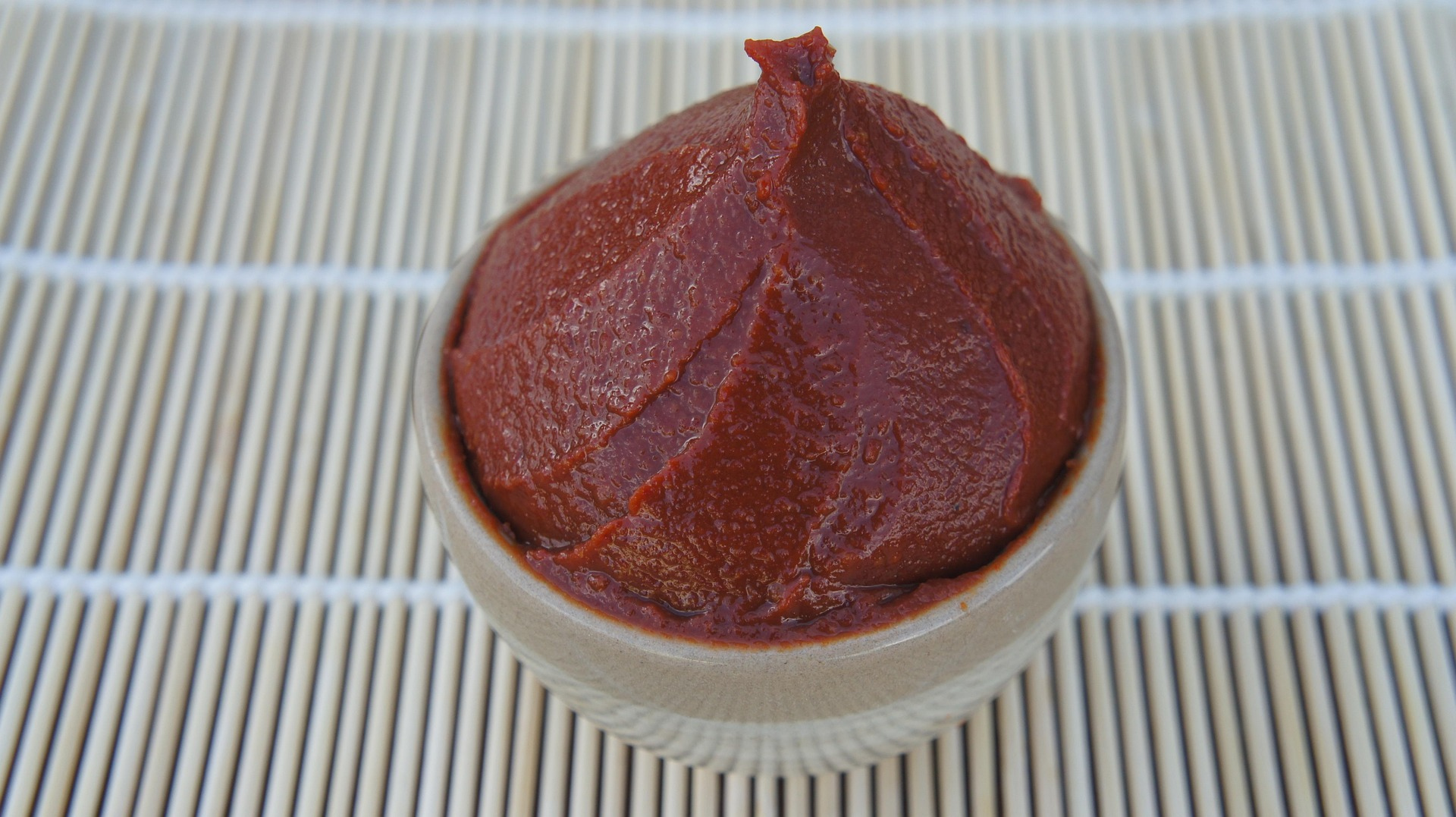
If kimchi is the heart of Korean cuisine, gochujang — Korean red chili paste — is its heat. It’s that deep, red sauce you’ll find almost everywhere: mixed into bibimbap, brushed on grilled pork, stirred into stews, or even used in fried chicken glazes.
Unlike most chili sauces around the world, gochujang isn’t just spicy — it’s layered. It’s sweet, salty, umami, and a little earthy, all at once. The heat doesn’t hit you right away; it builds slowly, blending with flavor instead of overpowering it.
That’s why even people who “don’t like spicy food” often end up addicted to Korean spice.
🌾 What’s Inside the Red Magic
A typical batch of gochujang starts with gochugaru, the vivid red chili powder that gives both color and heat. To that, Koreans add fermented soybeans, known as meju, which bring a deep savory note. Then comes glutinous rice or barley malt, adding gentle sweetness to balance the spice, and finally a pinch of salt to hold it all together. The ingredients sound simple, but together they create that unmistakable, slow-building heat unique to Korean food.
All of it is left to ferment slowly in clay pots under the sun for months, sometimes even years. During that time, natural enzymes break down starches into sugars, and the chili paste develops its signature harmony — sweet, spicy, and deeply rich.
That’s why no two batches of traditional gochujang taste exactly the same.
🧪 Fermentation Meets Fire
At first glance, gochujang might look like a simple chili paste, but it’s actually a fermented condiment, much like miso or soy sauce. The fermentation gives it not just flavor but also a long shelf life and complex umami that no raw chili sauce can replicate.
In the past, every household made its own gochujang and stored it in onggi (earthenware jars) outside, where the temperature changes helped the microbes work their magic. Today, most people buy it pre-made, but many Korean families still say, “Homemade gochujang tastes deeper.”
🌶️ How Koreans Enjoy the Heat
Koreans have a special relationship with spicy food — they don’t just eat it, they embrace it. From tteokbokki to sundubu jjigae (soft tofu stew) and buldak (fire chicken), spicy flavors are not about pain — they’re about pleasure and rhythm.
It’s not uncommon to hear laughter mixed with tears at a table where everyone’s sweating from the heat, saying,
“Maeunde masisseo!” (“It’s spicy, but so good!”)
That’s the Korean way: spice that challenges but rewards you.
When you see small red tubs in Korean supermarkets — that’s gochujang! If you’re new to it, start with “중간 매운맛 (medium spicy)”, and use it like ketchup: mix a spoonful into rice, stews, or marinades.
Once you fall for it, there’s no going back — everything starts tasting better with a little red heat.
🏺 Types of Gochujang
Not all gochujang tastes the same. Some are traditional, handmade versions, aged for months in clay jars until they turn dark and rich. Others are milder, sweeter types you’ll find in everyday Korean homes — the kind even kids can enjoy. And lately, you’ll see smoky or barbecue-style gochujang made for grilled meat, or vegan and gluten-free options designed for plant-based eaters abroad. The core recipe hasn’t changed much, but the creativity surrounding it definitely has.
“Gochujang jom deobuseyo.” (고추장 좀 더 주세요.) — “Can I get a bit more gochujang?”
You’ll hear this often at Korean restaurants — and you’ll probably say it too.
🧳 Final Thoughts — The Flavor That Burns Bright
Gochujang isn’t about showing off how much spice you can handle — it’s about balance and personality. It’s a symbol of how Korea turned simple ingredients — rice, chili, and fermentation — into something that defines an entire cuisine.
So next time you see that red paste on your table, don’t underestimate it. It’s not just spicy — it’s centuries of craft, culture, and bold flavor in one spoonful.
'🌿 Discover Korean Culture > 🍲 Korean Food & Dining Culture' 카테고리의 다른 글
| 🌿 Gim: The Crispy Secret Behind Every Korean Meal (0) | 2025.10.20 |
|---|---|
| 🌶️ Why Everyone Ends Up Loving Tteokbokki (0) | 2025.10.18 |
| 🍶 The New Life of Makgeolli — Korea’s Ancient Drink with a Modern Twist (0) | 2025.10.16 |
| 🧠 Why Soju Means More Than Just a Drink in Korea — The Spirit of Connection (0) | 2025.10.15 |
| 🌶️ Korea’s Fiery Love Affair with Spice (0) | 2025.10.08 |


