It’s no secret that Korean cosmetics attract travelers from all over the world. From Myeongdong to Hongdae, and even in suburban outlets, you’ll find visitors comparing serums, trying testers, and snapping photos of neatly arranged skincare shelves. What surprises me, even as a local, is how far people will travel just to buy Korean cosmetics.
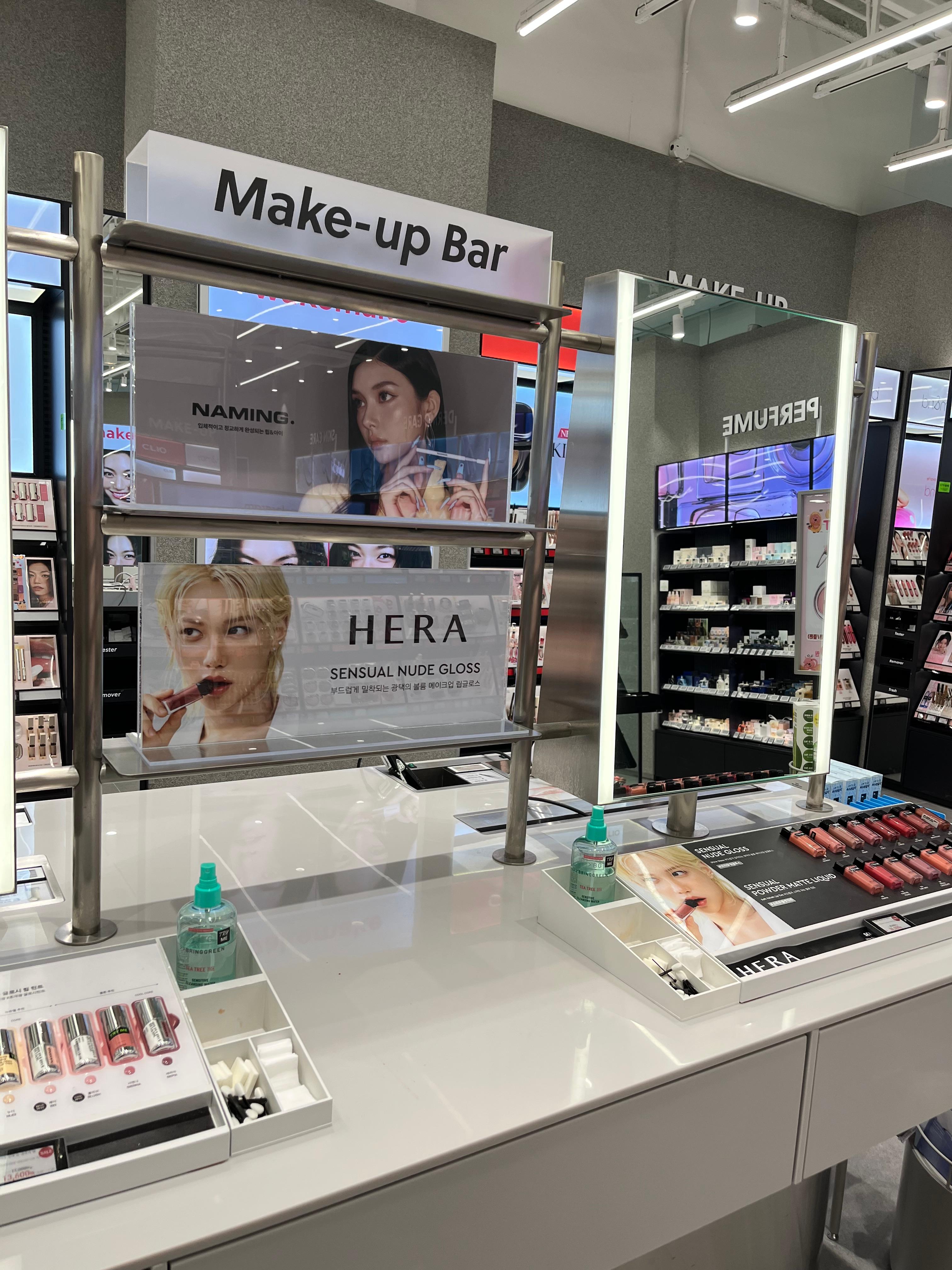
Just a few weeks ago, I visited the Hyundai Premium Outlet in Gimpo — and inside, there was the biggest Olive Young I’ve ever seen. I paused at the entrance for a moment, honestly amazed by the scale. It felt more like a mini department store than a beauty shop. What impressed me even more was the number of foreign tourists there. They had come all the way to this somewhat out-of-the-way outlet to shop for Korean skincare. It reminded me just how global K-beauty has become — and how deep that fascination runs.
🛍️ Beauty Streets and Sample Culture
If you walk through Myeongdong or Hongdae, you’ll notice something unique: nearly every store offers testers and free samples, even if you don’t buy anything. It’s not just marketing — it’s a reflection of Korea’s “try before you buy” culture. Shoppers here value transparency and direct experience, so brands compete to provide small packets of creams, toners, and masks.
For travelers, this is part of the fun. You can test a cushion foundation at one store, receive a serum sample at the next, and leave with a mini haul before spending a single won. Most shop assistants are used to foreign visitors and will kindly recommend items based on your skin type — even if you only speak a few words of Korean.
In Korea, samples aren’t just extras — they’re part of brand reputation. Many locals judge a store by how generous and thoughtful their samples are. It’s common to hear “서비스예요!” (“It’s a freebie!”) as staff hand you a few bonus items with a smile.
🏙️ From Myeongdong to Outlets
Seoul’s beauty map keeps expanding. Myeongdong remains the symbolic heart of K-beauty tourism, but now, large-scale stores appear in unexpected places like airports, shopping outlets, and suburban malls. At the Gimpo outlet, for example, Korean shoppers browse alongside tourists from Japan, Thailand, and the U.S. — all comparing ingredient lists and sharing finds over coffee.
This expansion shows how K-beauty has grown from a youth trend into a national industry. Even the layout of modern stores reflects that: open spaces, clean design, and sections divided by “skin concern” — dryness, sensitivity, brightening — making it easy for anyone to navigate.
If you plan to buy several items, keep your receipts. Many large beauty stores offer tax refunds right at the counter — you just need your passport. It saves you the hassle of claiming it later at the airport.
Also, don’t hesitate to ask about limited-edition sets. Korean stores often release seasonal boxes with full-size and travel-size products bundled together — great value and easy to gift.
🌸 A Blend of Shopping and Discovery
For many travelers, shopping for Korean cosmetics is more than just buying products — it’s a way to experience local culture. The bright lights, upbeat music, and friendly greetings make every visit feel lively. There’s no pressure to spend; you can browse freely, take photos, and ask questions without judgment. That atmosphere, warm and unhurried, is part of what people remember most after leaving Korea.
And for locals like me, watching this wave of interest feels both proud and fascinating. What started as a few street shops selling affordable skincare has turned into a global symbol of quality, creativity, and care. Whether it’s in Myeongdong or Gimpo, one thing is clear — K-beauty isn’t just about cosmetics anymore; it’s about the joy of discovering something that feels personal, both for visitors and for us.
'🌿 Discover Korean Culture > 🎶 K-pop & Modern Korean Culture' 카테고리의 다른 글
| 🎥 Eating as a Show: The Fascinating World of Korean Mukbang (0) | 2025.10.26 |
|---|---|
| 🌱 How K-Beauty Is Turning Into K-Wellness (0) | 2025.10.24 |
| 🍊 What When Life Gives You Tangerines Awakened in All of Us (0) | 2025.10.21 |
| Beyond the Beat: Why K-Pop Hits You in the Heart (0) | 2025.10.15 |
| When the Crowd Sings Louder Than the Artist: Inside Korea’s Legendary “Ttechang” Culture (0) | 2025.10.08 |


