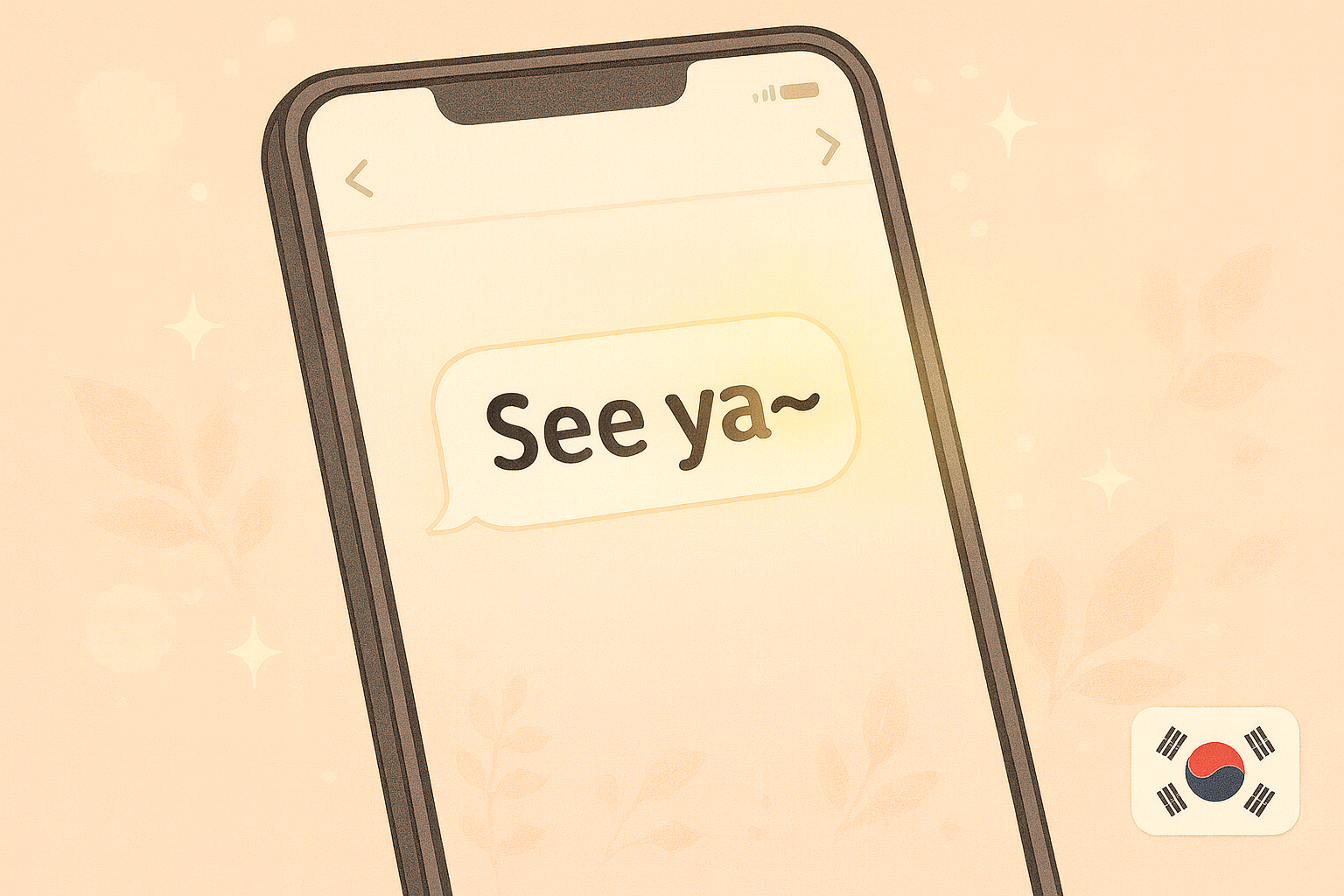
💬 Why Koreans End Texts with a Tilde (~)
Have you ever gotten a message from a Korean friend that ends like this?
“See you tomorrow~” or “Thank you~😊”
To most foreigners, it looks like a random squiggle. But in Korea, that tiny tilde (~) has become one of the most powerful emotional tools in digital communication. It softens the tone, adds friendliness, and says what words alone can’t.
📱 From Formal to Friendly — One Squiggle Away
Korean texting culture values subtlety and warmth. A plain “okay” might sound too cold or abrupt, but “okay~” feels light, cheerful, and open. The tilde acts like a smile that isn’t typed — it’s a tiny emotional bridge between people.
In English, tone often comes from emojis or punctuation (“Sure!” or “Haha!”). In Korean, it’s the tilde that plays that role. One little wave can change the mood from flat to friendly.
“The tilde isn’t decoration — it’s digital jeong (정).”
💡 Fun Fact
The tilde first appeared in early 2000s Korean internet culture — especially in online chats and fan cafés. Back then, it was a cute way to sound gentle or flirty. Over time, it became universal: bosses, teachers, even government social media accounts use it today.
🗨️ A First-Time Reaction
Foreigner: “Why does every Korean text end with a wavy line?”
Me: “It’s our way of smiling in text.”
Foreigner: “So like an emoji?”
Me: “Kind of — but more natural. Less ‘haha,’ more warmth.”
💡 Little Language Quirk
What makes the tilde so interesting is that it changes the meaning emotionally, not grammatically. Compare these two sentences:
- Without tilde: “Okay.” → sounds flat, possibly annoyed.
- With tilde: “Okay~” → sounds friendly, easygoing, affectionate.
It’s the same in Korean: “네.” (yes.) feels polite but stiff, while “네~” feels softer — like a nod and a smile combined. It’s how Koreans express jeong, that gentle connection that lives between people.
“In Korea, punctuation can carry emotion — and the tilde is the friendliest of all.”
❤️ What It Says About Korean Warmth
When I think about the tilde, I realize it reflects something deeper in our communication style. Koreans often wrap messages in warmth — even short ones. A “thank you~” or “okay~” isn’t about grammar; it’s about consideration. It says, “I don’t want to sound distant.”
In a way, the tilde is digital jeong — the subtle emotional glue that connects people here. It makes daily interactions, even online, feel more human. For foreigners, learning to use it naturally can be like discovering a secret code for kindness.
“The tilde shows how Koreans say more with less — a soft tone instead of extra words.”
🌿 Tip for Language Learners
If you’re learning Korean, try ending your texts with “~” sometimes. It can instantly make your tone sound friendlier — especially when you’re messaging older people, coworkers, or new friends. But remember, too many tildes can sound overly cutesy~ 😉
🥢 Final Thought
The tilde might look like a small wave, but it carries big meaning. It’s a reflection of Korea’s emotional subtlety — a soft signal of friendliness that bridges generations and cultures.
So next time you see a “See you~” from a Korean friend, know that it’s not random. It’s kindness, typed.
✨ Want more stories like this?
Join my free newsletter 👇
'🌿 Discover Korean Culture > 🏠 Korean Daily Life & Lifestyle' 카테고리의 다른 글
| ✨ Why Hanbok Still Turns Heads in Modern Korea (0) | 2025.10.13 |
|---|---|
| 🌈 Why Koreans Practically Live at Convenience Stores (0) | 2025.10.12 |
| 🪶 Hidden Calm: Discovering Korea’s Hanok Cafés (0) | 2025.10.12 |
| 🚚 While You Were Sleeping: Korea’s Dawn Delivery Culture (0) | 2025.10.09 |
| 📸 Four Cuts, Big Feelings — Why Korea’s Photo Booths Hook Every Traveler (0) | 2025.10.03 |


