If you’ve ever shared a meal with a Korean friend, chances are you’ve seen it — a thin, shiny sheet of something dark green, roasted and crackly, sitting quietly beside the rice.
That’s gim (김) — Korea’s beloved seaweed. It’s light as paper, yet somehow powerful enough to disappear by the handful before you realize it.
Kids eat it with rice. Adults pair it with spicy stews. Travelers buy it by the box before flying home. No one plans to eat that much gim, but it just happens — like chips, only healthier (and more loyal to rice).
So what makes this simple seaweed so irresistible? Let’s dive in. 🌊
🌊 What Exactly Is Gim?
Gim (pronounced geem) is Korean dried seaweed, made from thin layers of sea plants pressed and roasted until crisp. It’s simple — yet deeply flavorful.
Koreans have been eating it for centuries, originally as a luxury food for royalty during the Joseon era. Today, it’s a humble staple found in almost every kitchen — from kids’ lunchboxes to temple meals.
The basic idea? Seaweed harvested from clean coastal waters (especially around Wando or Gijang), dried in the sun, and lightly brushed with oil and salt before roasting. When done right, it melts like butter and leaves a whisper of the ocean behind.
🍙 A Small Sheet, A Big Role
Gim isn’t just a side dish — it’s a universal supporting actor. You can wrap it around rice to make gimbap (김밥), crumble it over a warm bowl for noodles, or serve it alongside spicy stews and grilled meat to bring balance to every bite. Koreans often say, “Bap gwa gim-imyeon dwae” (밥과 김이면 돼) — “Rice and gim are enough.” And honestly, sometimes they really are.
The oldest record of gim appears in a 15th-century Korean document describing seaweed collected from rocks along the southern coast.
Back then, it was a rare delicacy reserved for rituals and royal tables — not the everyday snack it is today.
Large-scale gim farming only began in the 1900s, when Koreans discovered how to grow it on bamboo poles in the ocean.
🔥 From Pan to Table
The traditional way to roast gim is over an open flame. You brush it with sesame oil, sprinkle a pinch of salt, and flip it fast — three seconds per side. It sizzles, turns emerald green, and the aroma fills the whole kitchen.
Nowadays, people buy pre-roasted gim in little snack packs — perfect for lunchboxes or even airplane snacks. (Yes, Korean airlines actually serve gim rolls with rice!)
💬 A First-Time Reaction
“Wait... it’s just seaweed?” ·
"Yeah. Try it with rice.”
“…Okay, why is this so good?!”
That’s usually how it goes. Simple ingredients; maximum harmony; very Korean.
At Korean restaurants, gim is often part of banchan (small side dishes). Need more? Say:
“Gim deo juseyo.” (김 더 주세요) — “More seaweed, please.”
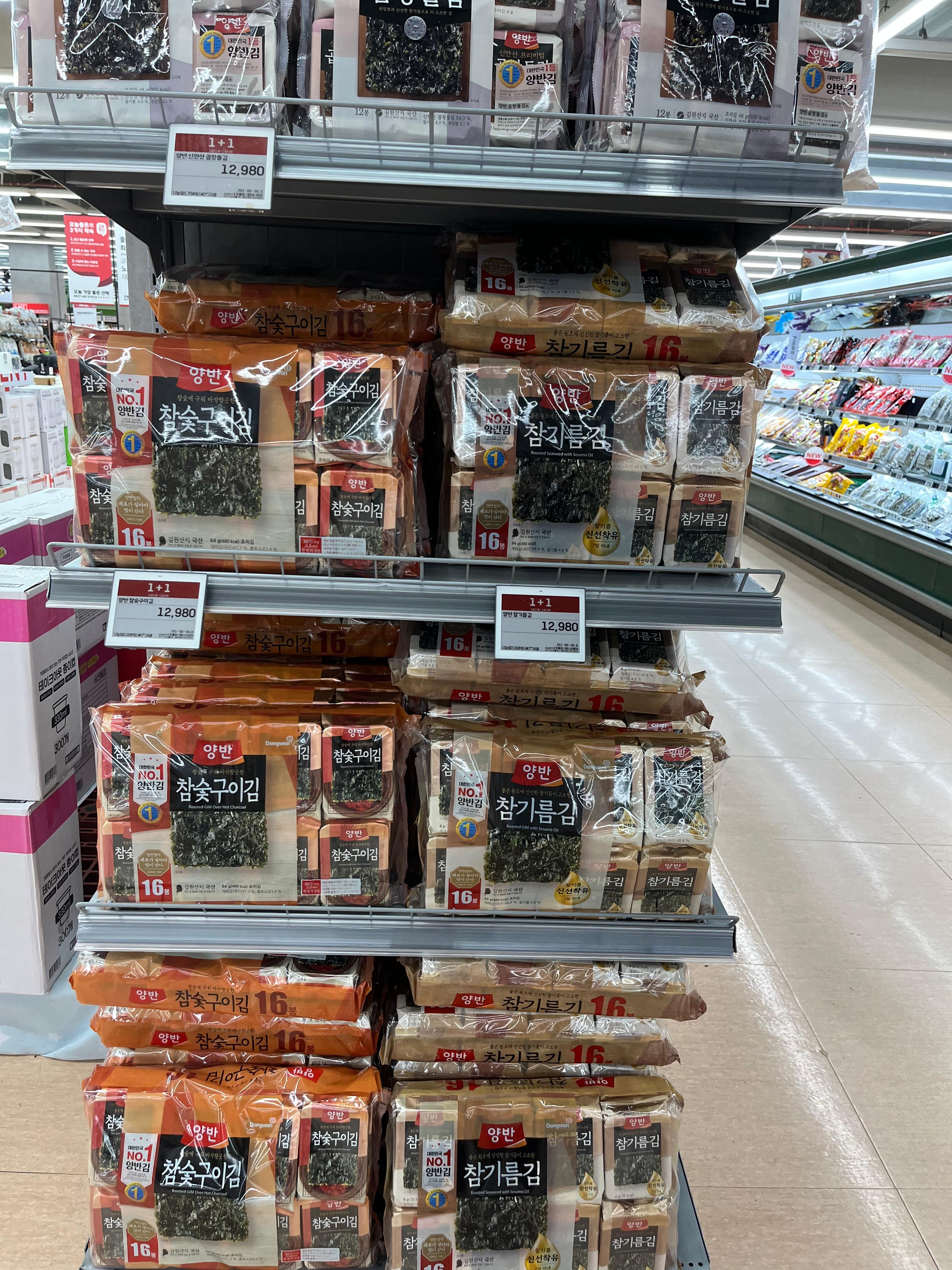
If you’re looking for souvenirs, try seasoned gim (yangnyeom-gim) — roasted sheets brushed with sesame oil and salt. Light, travel-friendly, and loved by everyone.
🌍 Beyond Korea
You’ll find Korean gim in supermarkets from L.A. to London now — sometimes labeled “seaweed snacks.” In Korean meals, though, it’s more than a snack; it’s a daily essential that completes a meal. That clean snap when it breaks? For many households, that’s the sound of breakfast.
💖 Why Koreans Love Gim
Koreans love gim because it’s quick, tasty, and pairs beautifully with almost anything. It softens the heat of spicy stews, adds a crisp contrast to rich dishes, and fits perfectly into lunchboxes, picnics, or even airplane meals. Light, flavorful, and endlessly adaptable — that’s the magic of gim.
'🌿 Discover Korean Culture > 🍲 Korean Food & Dining Culture' 카테고리의 다른 글
| 🥬 Inside Kimjang: How Koreans Turn Kimchi-Making into a Winter Feast (0) | 2025.10.22 |
|---|---|
| 🔥 How “Hot” Changes by Culture — Korean Heat vs Global Spice (0) | 2025.10.20 |
| 🌶️ Why Everyone Ends Up Loving Tteokbokki (0) | 2025.10.18 |
| 🌶️ Korea’s Spicy Secret — The Bold World of Gochujang (0) | 2025.10.17 |
| 🍶 The New Life of Makgeolli — Korea’s Ancient Drink with a Modern Twist (0) | 2025.10.16 |


