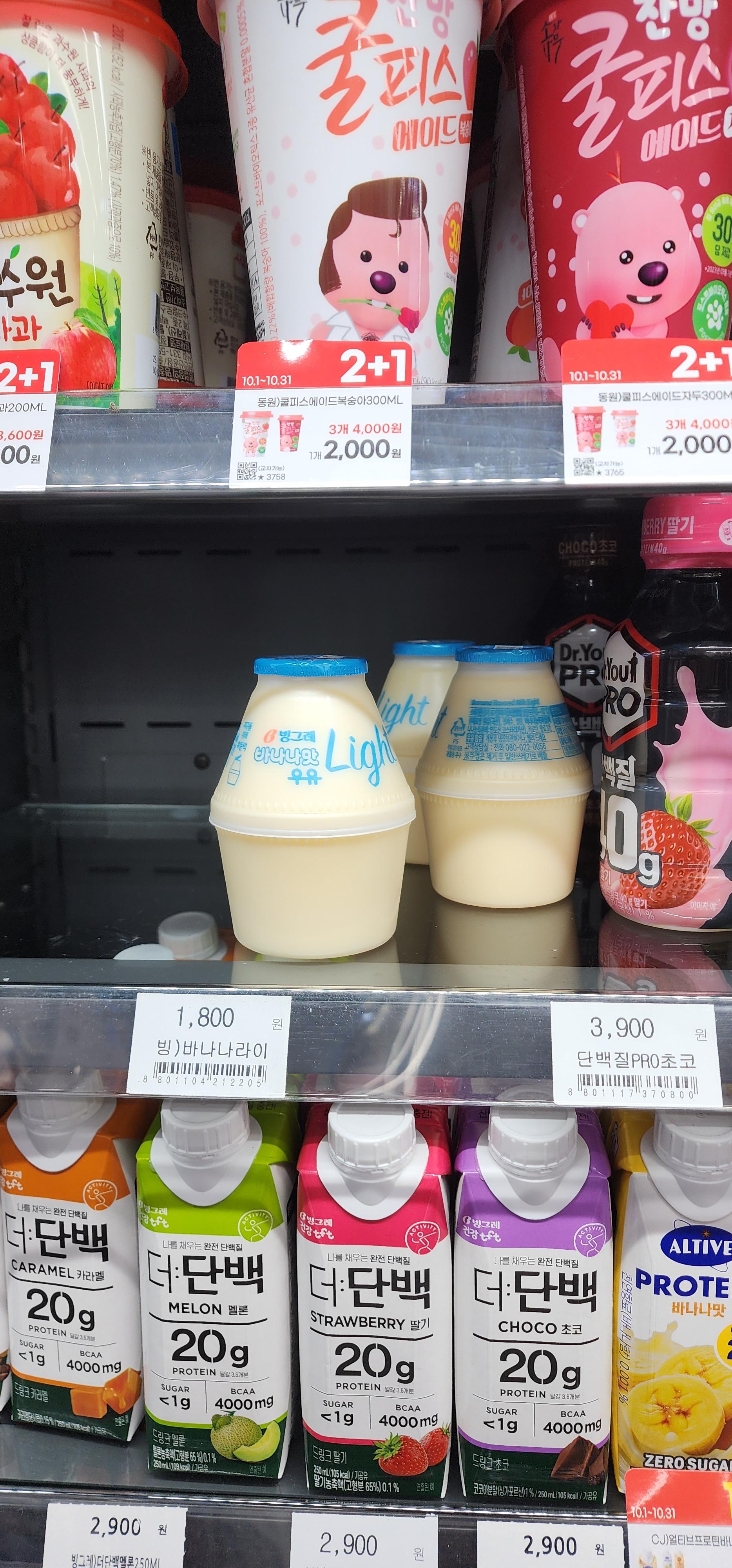
Korean banana milk — once just a nostalgic school snack — has become a full-blown global trend. From Paris cafés to New York’s K-town markets, that round yellow bottle has turned into a lifestyle symbol of K-culture itself. Cute, comforting, and quietly iconic, this little drink says a lot about how Korea’s everyday charm is captivating the world.
💭 The Taste of Bathhouse Memories
For many Koreans — myself included — banana milk isn’t just a drink. It’s a memory. When I think of it, I immediately recall the cool sweetness after a hot bath at a public bathhouse. As a child, that was the highlight of the day: finishing a long soak with my parents or grandparents and sipping that chilled, creamy banana milk straight from the bottle. It was simple, comforting, and quietly joyful — the perfect ending to a small ritual of care. Even now, banana milk is still one of the best-selling drinks in jjimjilbang (Korean bathhouses). Some memories, it seems, never fade — they just get colder and sweeter.
🥛 A K-Classic Turned Global Star
For Koreans, Binggrae Banana Flavored Milk is almost sacred — a drink that instantly brings back childhood memories. It first appeared in 1974, when fresh milk wasn’t common and flavored drinks helped popularize dairy consumption. Its cute round bottle was designed on purpose to make milk feel friendly and fun. Ironically, that same retro look is what made it go viral decades later.
Overseas, people love its nostalgic yet minimal design. The pastel yellow bottle, soft font, and the little green cap all feel photogenic — a perfect prop for Instagram or Pinterest. Search “Korean banana milk aesthetic”, and you’ll see thousands of posts from cafés and travel bloggers showing off this cheerful bottle next to a latte or a K-drama poster.
Binggrae’s banana milk bottle was designed after a “gourd jar” shape — a familiar traditional Korean form — to make it stand out on store shelves in the 1970s.
🌏 From K-pop Screens to Global Shelves
The international buzz around Korean banana milk didn’t happen overnight. It began quietly through K-pop idols and K-dramas, where the drink often appeared as a casual prop — a late-night snack, a cute character’s favorite, or something shared between friends. Fans began asking, “What is that little yellow drink?” Soon, supermarkets in the U.S., Canada, and Europe began importing it, and now it’s often sold out in stores like H-Mart or Asian Food Mart.
Some of this popularity also comes from the emotional comfort it offers. It’s sweet but not heavy — a “feel-good drink” that fits perfectly with the global craving for cozy, nostalgic, and aesthetically simple experiences. In a world of overcomplicated coffee trends, banana milk feels refreshingly sincere.
🍌 The Taste of Korean Comfort
Even though many new versions exist — strawberry, melon, even coffee — nothing beats the original banana flavor. For many Koreans abroad, finding it in a foreign grocery store feels like discovering a piece of home. It’s not just about the taste; it’s about the emotion attached to it — the memory of childhood lunches, convenience-store breaks, and summer afternoons with friends.
When I travel and spot that familiar bottle in a fridge somewhere far from Seoul, I can’t help but smile. It’s more than just a drink — it’s a quiet reminder that ordinary Korean moments can travel far, and still keep their warmth.
Over 6 billion bottles of Binggrae Banana Flavored Milk have been sold since its launch. Today it’s available in over 20 countries — from France to the Philippines — and remains one of Korea’s longest-selling products.
✨ Why Travelers Remember It
Korean banana milk isn’t about luxury or rarity — it’s about everyday happiness. It’s what you buy after school, at a train station, or while waiting for your flight home. And maybe that’s why it’s become such a global favorite: it captures the quiet joy of ordinary Korean life, bottled up in one sweet, pastel drink.
It’s small, it’s simple, and it makes people smile — that’s the kind of power only true comfort can have.
'🌿 Discover Korean Culture > 🍲 Korean Food & Dining Culture' 카테고리의 다른 글
| 🍜 Why Korean Ramyeon Is More Than Just Instant Noodles (0) | 2025.10.24 |
|---|---|
| 🥓 Why Samgyeopsal Is More Than Just Korean BBQ (0) | 2025.10.23 |
| 🍜The Global Rise of Korean Bunsik: How Tteokbokki and Corn Dogs Took Over (0) | 2025.10.22 |
| 🥬 Inside Kimjang: How Koreans Turn Kimchi-Making into a Winter Feast (0) | 2025.10.22 |
| 🔥 How “Hot” Changes by Culture — Korean Heat vs Global Spice (0) | 2025.10.20 |


