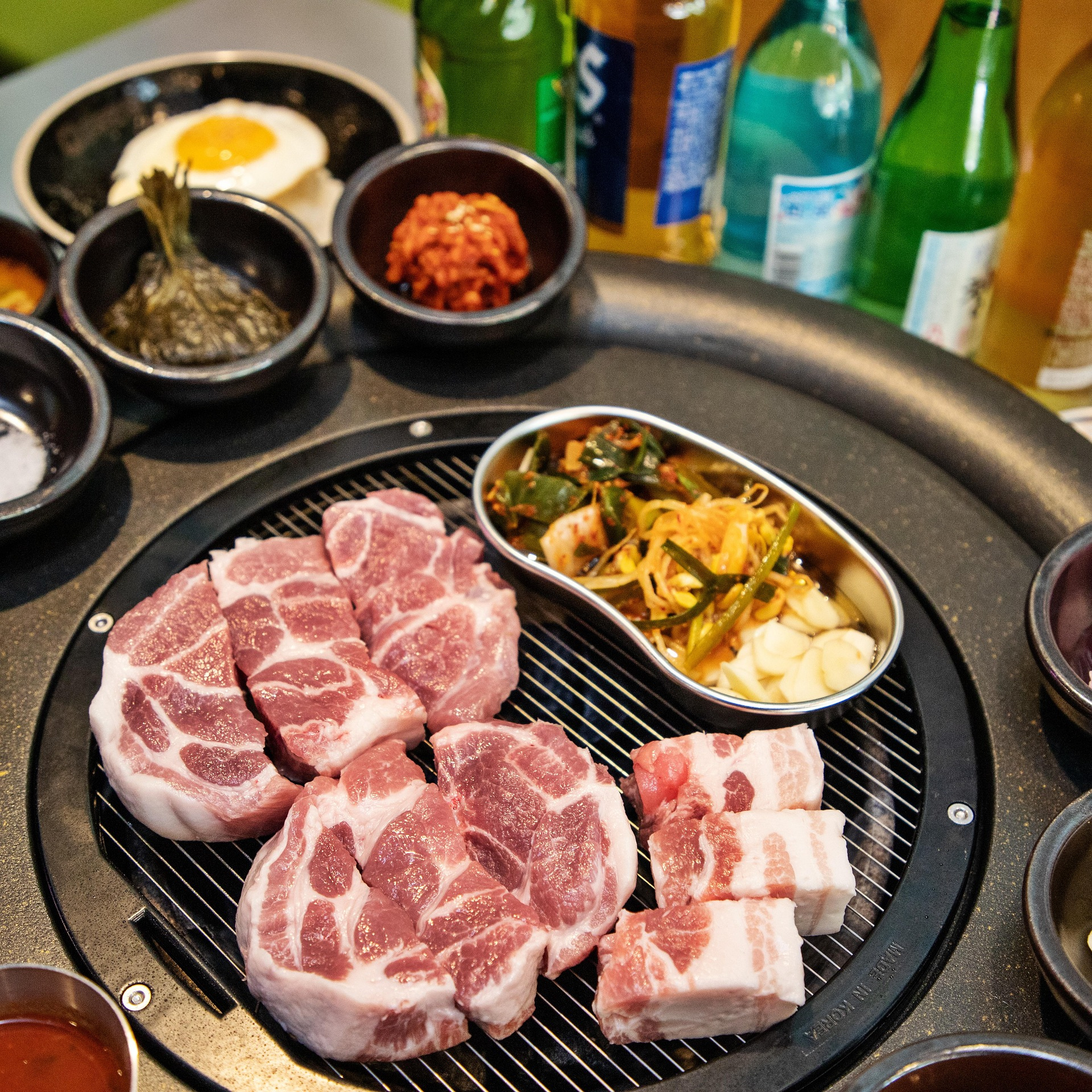
Samgyeopsal — Korea’s beloved grilled pork belly — isn’t just about smoky meat and sizzling pans. It’s a whole experience: a table full of lettuce, garlic, ssamjang, and laughter. For many visitors, it’s the ultimate Korean BBQ; for Koreans, it’s something deeper — a weekly ritual of connection, flavor, and comfort that captures the essence of Korean dining culture.
🔥 A Family Favorite, Always on the Menu
I think I eat samgyeopsal at least twice a week. My kids absolutely love it — sometimes we grill it at home, sometimes we boil it for a softer, milder version. Either way, it never fails. When you pair it with aged kimchi or mix it with spicy, sweet bibim-myeon (cold spicy noodles), it’s simply unbeatable. The smell alone can turn any ordinary evening into something special — a small celebration of everyday life.
That’s why samgyeopsal isn’t just a dish. It’s part of our weekly rhythm — something that gathers everyone at the table, no matter how busy life gets. There’s something deeply satisfying about watching the fat slowly crisp, hearing the sizzle, and wrapping that perfect slice in lettuce with a dab of ssamjang and a bit of rice. It’s not fancy, but it feels complete.
🥬 The Joy of Wrapping — and Sharing
In Korea, eating samgyeopsal isn’t a solo activity. It’s meant to be shared — usually around a grill in the center of the table, everyone cooking, turning, and laughing together. Each bite is a little different depending on who made it — some add raw garlic, some prefer kimchi or perilla leaves, others skip the sauce entirely. The fun is in the mix-and-match creativity that makes every table unique.
There’s also an unspoken rule: you grill for others before yourself. It’s an act of care — a quiet, sizzling version of Korean jeong (정), that warmth and connection expressed through food. Maybe that’s why no matter how many fancy fusion restaurants open, a smoky samgyeopsal place packed with people still feels like home.
“Samgyeopsal” literally means “three-layered flesh,” referring to the three visible layers of meat and fat in pork belly. It became popular in the 1970s when beef was expensive, and pork was considered the affordable, cheerful choice — one that quickly turned into a national favorite.
🍶 The Perfect Pairings
Of course, samgyeopsal doesn’t travel alone. It comes with a full cast of side dishes: kimchi, garlic, perilla leaves, ssamjang, and salt with sesame oil. And then there’s the iconic drink pairing — soju. That sizzling meat and the cold, clear shot of soju is almost poetic in its simplicity. It’s no wonder locals often say, “Samgyeopsal without soju is like a song without melody.”
In recent years, many restaurants have started offering creative twists — pairing samgyeopsal with craft beer, truffle salt, or even cheese fondue. But at its core, it’s still the same humble dish that brings comfort and togetherness with every bite.
Korea celebrates “Samgyeopsal Day” every March 3rd — because 3.3 looks like the “three layers” of pork belly! Many restaurants offer discounts or special menus that day, and lines often stretch down the block.
✨ Why Travelers Love It
For travelers, samgyeopsal is one of the easiest and most joyful ways to experience Korean culture firsthand. You cook your own food, share it, laugh, and maybe walk out smelling like smoke — a badge of honor for anyone who’s truly eaten like a local. It’s more than a meal; it’s a memory you carry long after you’ve left the restaurant.
In a way, samgyeopsal tells the story of Korea itself — warm, communal, and always best when shared.
'🌿 Discover Korean Culture > 🍲 Korean Food & Dining Culture' 카테고리의 다른 글
| 🥬 The Art of the Perfect Bite: Korea’s Ssam and Ssamjang (0) | 2025.10.26 |
|---|---|
| 🍜 Why Korean Ramyeon Is More Than Just Instant Noodles (0) | 2025.10.24 |
| 🍌 How Korean Banana Milk Became a Global Mood (0) | 2025.10.23 |
| 🍜The Global Rise of Korean Bunsik: How Tteokbokki and Corn Dogs Took Over (0) | 2025.10.22 |
| 🥬 Inside Kimjang: How Koreans Turn Kimchi-Making into a Winter Feast (0) | 2025.10.22 |


